Eyelash extensions: Using the adhesive in very hot conditions
The warmer months are brilliant for your clients’ complexions, but not so great for your adhesive. As soon as the temperature rises, the very same adhesive that gave you perfect results in winter starts to set too quickly, turn white or come loose after just two weeks. The good news is that this is almost never down to a poor-quality adhesive, but rather to an environment that isn’t properly managed. Here’s how to get back in control.
Why Heat and Humidity Disrupt Your Lash Glue
Eyelash extension adhesives are made with cyanoacrylate. This ingredient cures when it comes into contact with moisture in the air—a process known as polymerization. The higher the humidity and temperature, the faster this reaction occurs. During summer, the air is typically warmer and more humid, causing your adhesive to cure faster than expected. The result? The glue droplet begins to dry on the extension before you even place it on the natural lash, the bond is incomplete, and retention drops dramatically.
The Right Conditions: Ideal Humidity and Temperature
Every adhesive has its own recommended working range specified by the manufacturer, but most lash professionals agree on these ideal conditions:
- Humidity: between 50% and 70% for most lash adhesives.
- Room temperature: between 20°C and 24°C (68°F–75°F).
Without measuring these conditions, you're essentially working blind. One of the best investments for your lash studio during summer is a simple hygrometer (often combined with a thermometer), placed near your workstation.
High Humidity: Your Adhesive Cures Too Fast
This is the number one challenge during summer. When humidity rises above 65–70%, the adhesive becomes too fast: it starts curing on the tip of the extension, bonding becomes less reliable, and you may notice slight whitening (shock curing) or stronger adhesive fumes.
Here are a few solutions:
- Reduce the humidity in your room using a dehumidifier or air conditioning.
- Replace your glue drop more frequently (every 15–20 minutes). A fresh glue drop is a reliable glue drop.
- Dispense a smaller glue drop and maintain a steady working pace.
Over-Air-Conditioned Room: Your Adhesive Becomes Too Slow
On the other hand, excessive air conditioning dries out the air. When humidity drops below 45%, the adhesive stays liquid for too long. You'll need to maintain lash isolation longer to prevent neighboring lashes from sticking together, slowing down your application. Slightly increase the humidity with a humidifier or move your workstation away from the direct airflow of the air conditioner.
Your 6 Summer Adhesive Essentials
- Measure the room's humidity and temperature before every appointment.
- Keep your workspace between 20°C and 24°C (68°F–75°F) with 50–70% humidity.
- Refresh your glue drop regularly.
- Close the adhesive bottle immediately after each use.
- Choose an adhesive speed that matches the season instead of forcing your technique.
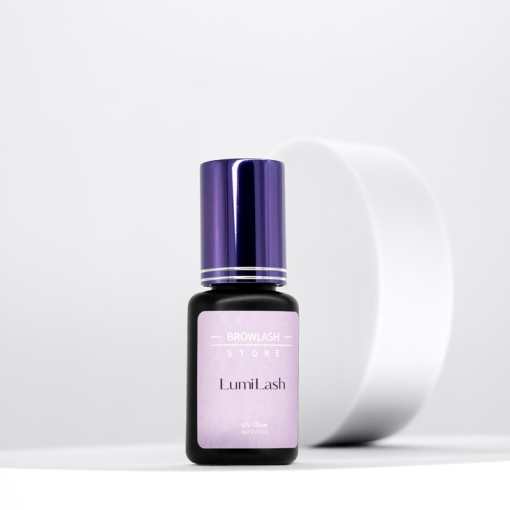
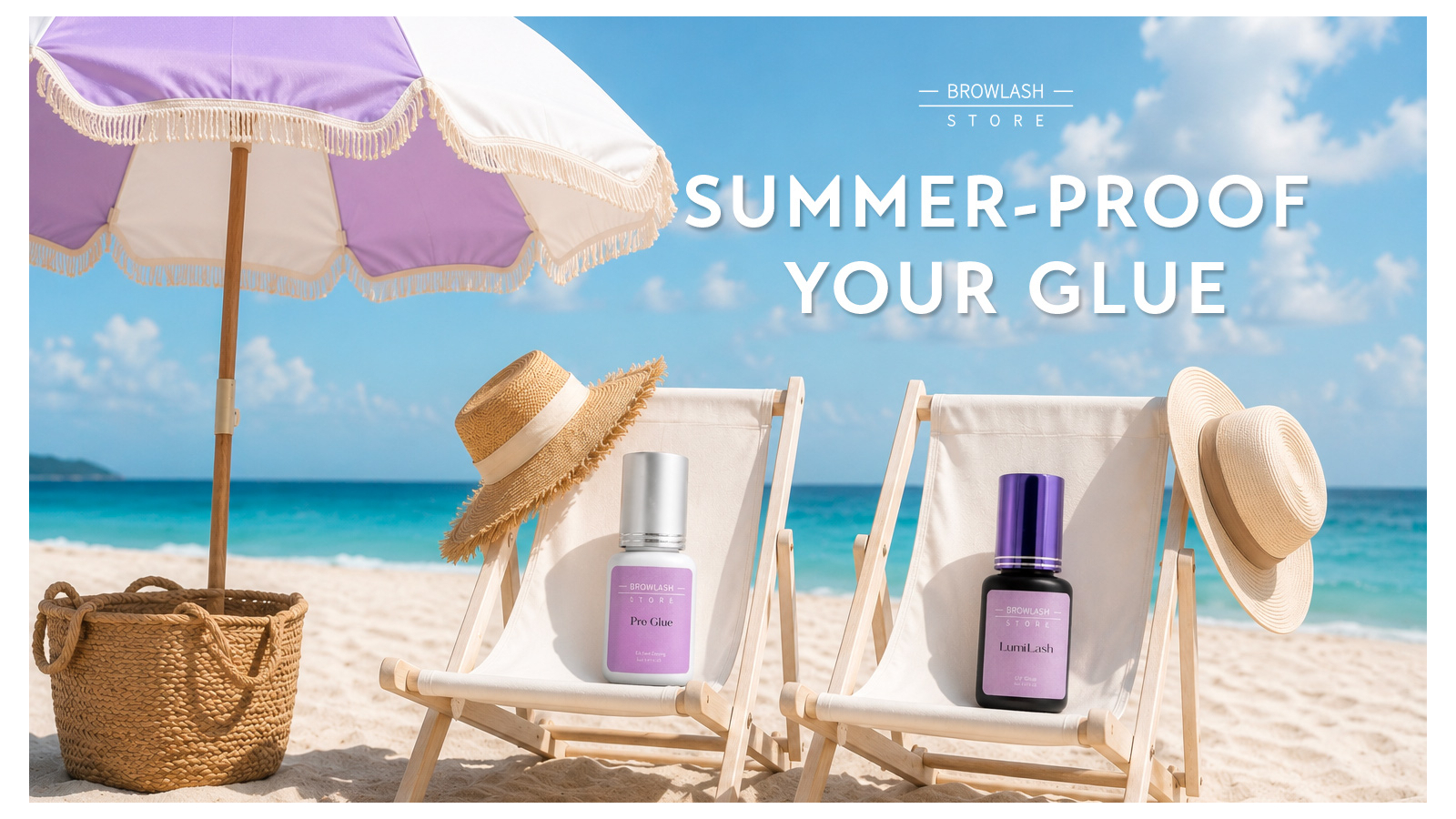
- Consider using a UV adhesive such as LumiLash, which cures under a UV lamp and is no longer dependent on ambient humidity.
How to Store Your Adhesive During Summer
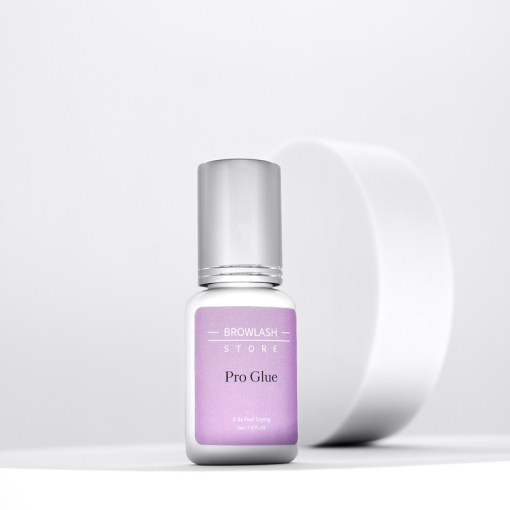
Heat damages adhesive—even when the bottle is closed. Store your opened adhesive away from direct sunlight and heat in an airtight container with a moisture-absorbing packet. Unopened adhesives are best kept in a cool place (never in direct sunlight on your workstation). Take the bottle out ahead of time so it can return to room temperature before your appointment. Discover our range of professional lash adhesives and lash prep products.
What Your Clients Need to Know (The First 24–48 Hours)
Even a flawless lash set can be compromised by poor aftercare during summer. Remind your clients to avoid salt water, chlorinated pools, saunas, and steam for the first 24–48 hours. Afterwards, they should cleanse their lashes daily with a gentle oil-free cleanser such as Lash Foam. To share all your aftercare advice at once, send them our guide Summer, Sun & Holidays: How to Care for Your Lashes and Brows. For sensitive clients, Sensitive Air Gel significantly improves comfort during the appointment.
FAQ
What humidity level is best for applying eyelash extensions?
Aim for 50–70% humidity with a room temperature between 20°C and 24°C (68°F–75°F). Above this range, the adhesive cures too quickly; below it, it remains liquid for too long.
Why does my lash adhesive turn white in summer?
Whitening (shock curing) is caused by adhesive curing too quickly, usually due to excessive humidity. Reduce the humidity, use a smaller glue drop, and replace it more frequently.
Should I switch to a different adhesive during summer?
Not necessarily. First, make sure your working environment is under control. If extreme heat and humidity persist, switching to a slightly slower adhesive or a UV adhesive can be an excellent seasonal solution.
In Summary
During summer, it's not your adhesive that's failing—it's your environment that's changing. Measure your humidity and temperature, stabilize your workspace, refresh your glue drops regularly, and choose an adhesive suited to the season. These simple adjustments are enough to achieve clean applications and outstanding retention, even during a heatwave.
Want to take your lash retention even further? Explore our range of professional lash adhesives, our salon equipment, or improve your skills with our lash and brow training courses.