
How to Choose the Best Eyelash Extension Glue?
There is no one perfect glue, but rather the right choice for each context. Lash artists must consider their technical level, work environment, and desired results to select the best eyelash extension glue. This page guides you through the key criteria to help you make informed decisions and ensure safe, long-lasting applications.
In a Nutshell
The best eyelash extension glue depends on the drying time you need, the humidity level in your workspace, and your level of experience. A slow-drying glue is ideal for beginners, while fast glue suits advanced technicians. Environmental conditions also have a strong impact on performance. Careful selection ensures client comfort and satisfaction.
Summary
- Key performance criteria of lash glue
- Adapting your glue choice to your environment
- Which glue for which level of experience?
- How to find the best glue for your context
- Common mistakes when choosing glue
- FAQ: Best eyelash extension glue
- Explore our glues by professional needs
Key Performance Criteria of Lash Glue
Three main factors define the quality of eyelash extension glue. Drying time affects speed and comfort: the shorter it is, the more skill it requires. Viscosity affects precision: fluid glues are better for experts, while thicker ones help beginners with control. Finally, retention is crucial for durability—a good glue must hold well for several weeks without damaging the natural lash.
Adapting Your Glue Choice to Your Environment
Humidity and temperature directly impact glue performance. In a dry room, fast glue may cure too quickly and complicate the application. Conversely, in a humid environment, slow glue might not adhere properly. Using a hygrometer is essential for adjusting your choice. The best glue is the one suited to your actual working conditions.
Which Glue for Which Level of Experience?
Your experience level also plays a key role. Beginners should opt for slow-drying glue (1–3 seconds) that gives them time to isolate and place the extension properly. Advanced lash artists will prefer fast-drying glue (around 0.5–1 second) to speed up the process and serve more clients. Choosing glue that matches your skill avoids frustration and ensures control.
How to Find the Best Glue for Your Context
Choosing the best eyelash extension glue depends on both your technical level and your salon environment. Beginners will benefit from thicker, slower glues (1–3 second drying time) that allow for more adjustments. Experienced artists prefer fast, fluid glues (0.5–1 second) that support fast and precise application. Room conditions matter too: in a dry, air-conditioned space, slow glue helps prevent premature curing. In humid rooms, fast glue stabilizes adhesion. For sensitive clients, opt for transparent or hypoallergenic glue to reduce irritation risks. Identifying the right glue for each scenario helps secure your work and improve client satisfaction. This tailored approach builds client loyalty and ensures consistent results throughout the year.
Common Mistakes When Choosing Glue
Frequent mistakes include using glue that's too fast for a beginner—leading to lash sticking issues—or choosing a formula that doesn't suit the salon's humidity. Skipping European compliance checks can pose health and legal risks. Keeping glue for too long after opening also affects its performance. Avoiding these mistakes is essential to maintain high standards and safety.
FAQ: Best Eyelash Extension Glue
What is the best eyelash extension glue for beginners?
For beginners, the best glue is one with a slow drying time (1 to 3 seconds). It gives enough time to isolate and place each lash without rushing. A slightly thicker texture helps control the glue drop. This forgiving formula helps develop solid habits before moving on to faster glues.
What’s the difference between fast and slow drying glues?
Fast-drying glue cures in under a second and requires advanced technique, while slow glue (1 to 3 seconds) allows more time and flexibility. The best glue depends on the technician’s experience and environment. Pros favor fast glue to streamline appointments; beginners feel more confident with slower glue.
Which glue to use in a humid room?
In high humidity, fast-drying glue is best. Humidity slows down polymerization, and slow glue may struggle to bond. A hygrometer helps monitor and adjust conditions. Choosing the right glue avoids premature lash loss and improves retention.
Is the best eyelash glue the same for every client?
No—each client has different sensitivities and expectations. Sensitive clients benefit from transparent or hypoallergenic glue. For long-lasting results, classic black glue with high retention works well. Matching the glue to each client improves comfort, results, and loyalty.
What are the risks of using the wrong glue?
Inappropriate glue may lead to poor retention, client discomfort, or even lash damage. For example, using fast glue with little experience or ignoring humidity can cause problems. The best eyelash extension glue is the one that fits your level and environment. A well-chosen glue avoids complications and boosts your salon’s reputation.
How should I store my glue to keep it effective?
The best eyelash extension glue loses effectiveness if not stored correctly. After opening, it lasts 4 to 6 weeks when kept in an airtight container, away from moisture and temperature fluctuations. Use silica packs and avoid direct heat to extend its life. Proper storage ensures optimal retention and consistent results over time.
Explore Our Glues by Professional Needs
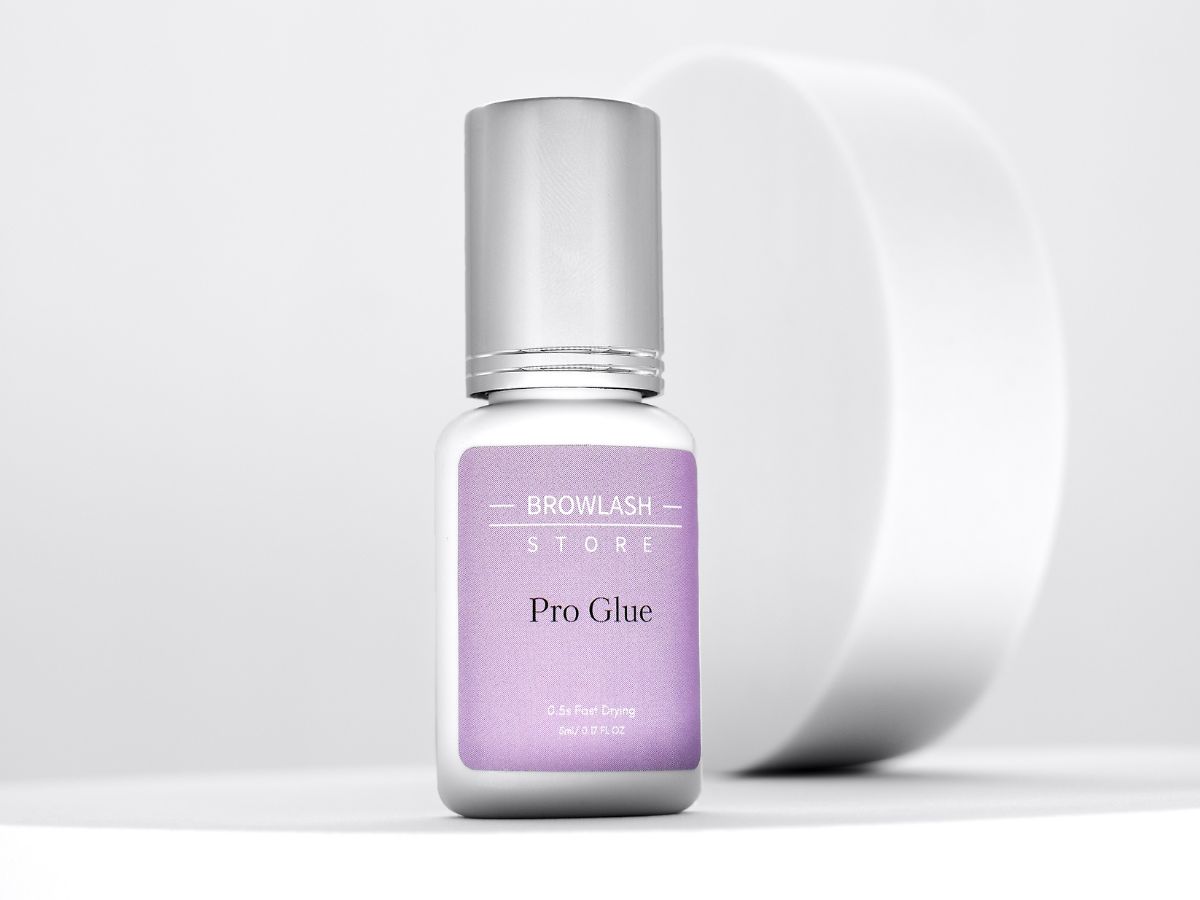
At Browlash Store, we know there’s no one-size-fits-all glue. That’s why we offer a diverse selection tailored to every profile—beginners, experienced artists, dry or humid environments. All our formulas are EU-compliant and come with practical tips for optimal use.
Explore our range today and find the glue that best fits your professional needs.
Learn more about Browlash Store products:
- Lash lift, the essential solution for natural and professional lash enhancement
- Lash lift or eyelash enhancement: understand the differences and applications
- How to choose the right lash lift product for professionals
- K Lift, the new generation of Korean lash lift in Belgium
- Korean lash lift training to master the K Lift technique
- Russian volume, the top technique for full, dramatic lash sets
- Premade lash fans, a time-saving solution for professionals
- Eyelash extension glue, a core product in professional application
- Lash and brow tint, a must-have technique in salons
- Comprehensive lash and brow training to master expert techniques